We can't find the internet
Attempting to reconnect
Something went wrong!
Hang in there while we get back on track
Open access · Not-for-profit · Built for serious topics
RationalGrid helps you think through ideas that do not fit in a chat box.
Use it to map arguments, concepts, evidence, and counterarguments in a shared visual grid. Instead of losing the thread in a long conversation, you build a structure you can inspect, improve, and revisit.
It is designed for learning, teaching, research, and public reasoning around topics where the relationships between ideas matter.
Why RationalGrid exists
The point is simple: help people build understanding around complex subjects without flattening them into a disposable stream of replies.
Used for
Questions that branch
Use RationalGrid when you need to compare positions, unpack a text, follow evidence, or teach a difficult concept without reducing it to one answer.
Why it exists
Understanding needs structure
Serious topics are rarely linear. RationalGrid makes the shape of a discussion visible so people can see how claims connect, where disagreements sit, and what still needs explaining.
Different from chat
Built for understanding, not just output
ChatGPT and Claude are excellent at producing responses. RationalGrid turns responses into a persistent map you can inspect, share, and keep improving.
Why people use this instead of starting another chat
RationalGrid complements tools like ChatGPT and Claude by preserving the structure, collaboration, and memory that chat interfaces tend to lose.
See the whole argument
A chat gives you the latest reply. RationalGrid keeps the surrounding branches, tradeoffs, and related ideas visible at the same time.
Work on the same map
Share one grid with classmates, colleagues, or collaborators instead of copying fragments between separate chat sessions.
Keep what you learn
Your work stays useful as reference and revision material instead of sinking into old chat history.
Want the feature walkthrough?
The guide covers the workflow, interface, and product capabilities in detail.
Our Partners
Working together to make knowledge more accessible.
Philosophy for All
A London-based charity making philosophy accessible to everyone through free events and workshops.
Visit websiteYour Organisation Here
We're looking for educational institutions and non-profits who share our mission of open access learning.
Partner With Us
Join a growing community dedicated to improving discourse and critical thinking through technology.
Interested in partnering with us? Get in touch .
The People Behind RationalGrid
Built with care by a small, passionate team.
Peter Worley
Advisor
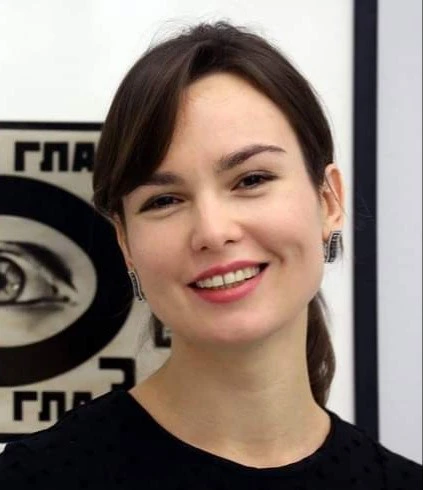
Alexandra Konoplyanik
Advisor
Tom Berman
Founder & Developer
Tom created RationalGrid out of a conviction that AI could do much more than answer questions in a linear chat — it could help people actually think. The idea was to build a tool where every response becomes a box in a living knowledge map, letting users branch, compare, and expand ideas visually rather than scrolling through walls of text.
As the sole developer, Tom designed and built the entire platform from the ground up — the real-time collaborative graph engine, the AI integration layer, the presentation mode, export system, and everything in between. The stack is Elixir and Phoenix LiveView, chosen for their strengths in real-time, concurrent applications.
Tom's background spans software engineering and a long-standing interest in philosophy and critical thinking. RationalGrid is where those two worlds meet: a tool built with care to help people reason better, together.
Martin Loat
Partnerships Director
After getting a degree in philosophy, Martin started his career in journalism, specialising in business matters (including a stint writing about advertising for The Guardian).
Entrepreneurial by nature, he went on to launch and build a B2B public relations agency, which specialised in supporting marketing industry and tech clients. When he sold this company in 2023 it had 50 people working in London and New York and clients including Samsung.
Martin is a proven social action campaigner. He was awarded an OBE in 2023 for his voluntary work chairing the Campaign for Equal Civil Partnerships which helped get the law changed and civil partnerships introduced for heterosexual couples in England & Wales in 2019.
Martin is now an angel investor, strategic comms advisor and leadership mentor to a number of growing businesses, including in AI.
Maya Darmon
Grid Curator
Maya Darmon is a philosophy graduate from Girton College, University of Cambridge, where she developed a strong foundation in critical thinking, logic, and the analysis of complex ideas.
Maya is particularly interested in how structured reasoning and collaborative dialogue can be enhanced through technology. She has been involved in exploring tools that augment human thinking, bringing together philosophy and AI to improve how ideas are debated, refined, and understood.
At RationalGrid.ai, Maya contributes a philosophical perspective to the design of AI systems, helping ensure that technology supports deeper reasoning, clarity of thought, and meaningful collaboration.
Our Advisors
Expert guidance in philosophy, education, and applied reasoning.
Peter Worley
Philosopher, Educator & Author
Peter Worley is a philosopher, educator, and co-founder and former CEO of The Philosophy Foundation, a charity bringing philosophy to schools and public settings. He has spent over two decades developing practical approaches to thinking, questioning, and dialogue, and is the creator of PhiE (Philosophical Enquiry), a structured method for facilitating rigorous, collaborative reasoning.
An award-winning author of books, including The Philosophy Shop, The If Machine, and Corrupting Youth, his work focuses on making high-quality thinking teachable and transferable. His pedagogy has informed projects such as the BAFTA-nominated BBC programme What Makes Me Me?, the documentary Young Plato, and the BBC prison drama Waiting For The Out.
Alexandra Konoplyanik
Philosophical Counsellor & Facilitator
Alexandra Konoplyanik is a philosophical counsellor and facilitator specialising in applied philosophical enquiry for clearer thinking, better questioning, and collaborative reasoning. She works across education, public philosophy, and professional contexts.
She is Secretary and Co-Organiser of Philosophy For All and Social Media Editor at Philosophy Now. She has also worked as a philosophical consultant on digital products, contributing to the conceptual robustness of Lifeaddwiser (employee wellbeing solutions).
Before moving into philosophy, Alexandra worked in investment banking and executive search. Her approach focuses on translating philosophical methods into usable formats that help individuals and groups think more clearly and engage productively with complex questions.
How It's Built
RationalGrid is built with modern, battle-tested technologies chosen for real-time collaboration, performance, and reliability.
Elixir
A functional programming language built on the Erlang VM, designed for building scalable, fault-tolerant, concurrent applications.
Phoenix LiveView
Real-time, server-rendered interactive UIs without writing custom JavaScript. Powers the collaborative graph editing experience over WebSockets.
PostgreSQL
A robust, open-source relational database. Stores graphs as JSONB documents for flexible, schema-less node and edge data with full SQL querying.
Cytoscape.js
An open-source graph visualisation library that renders the interactive knowledge grid — handling layout, navigation, and node interactions in the browser.
Tailwind CSS
A utility-first CSS framework for rapidly building custom user interfaces without leaving the markup.
Google Gemini
AI models generate branching responses, summaries, pros and cons, and comparative analysis — turning questions into rich knowledge maps.
Deployed on Fly.io for low-latency global distribution. Fully open source on GitHub.
We'd Love Your Feedback
Help us improve RationalGrid — tell us what's working, what's not, or what you'd like to see.
Ready to expand?
Start mapping your ideas, challenging assumptions, and building understanding — it's free to use and always will be.